Shopping for DIY Bunion Products? Read This First!
Walking down the foot care aisle at your local pharmacy reveals a massive wall of gadgets promising to cure your bunion. From silicone spacers to rigid plastic braces, the DIY market is booming with products designed to straighten your big toe.
But do any of these over-the-counter products actually work?
That depends on what you expect them to do! Some can be useful, but all have limitations. Below, Lionel G. Hausman gives his clinical verdict on the most popular DIY bunion treatments. Read on so you know what to buy (and why).
The Clinical Verdict on Toe Spacers
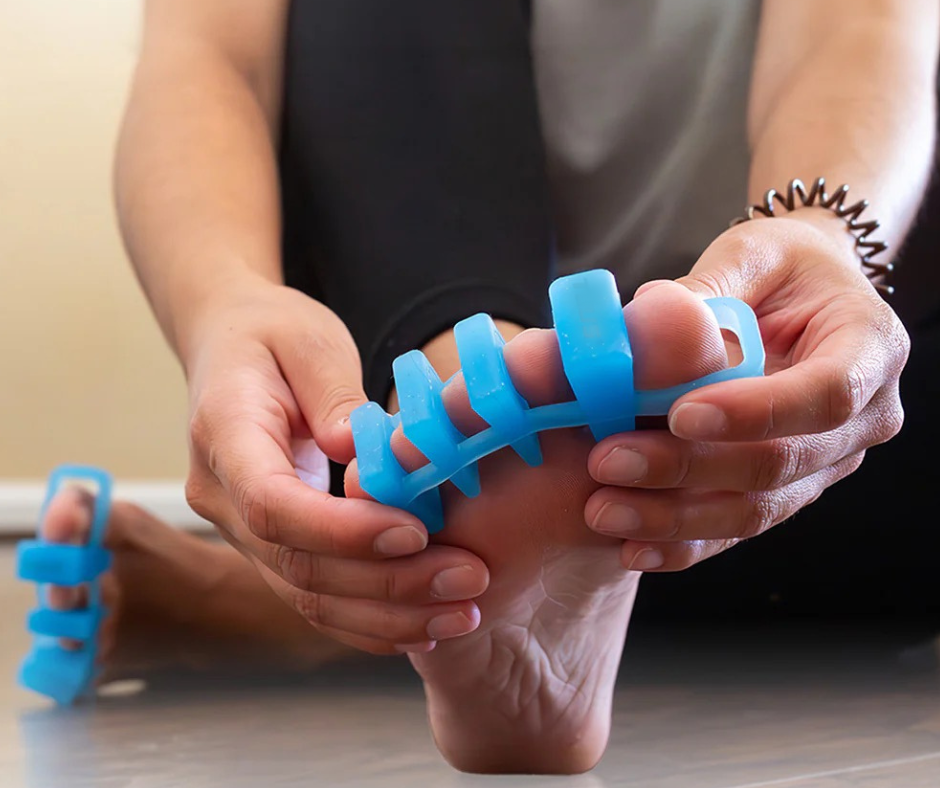
Silicone toe spacers are both popular and inexpensive. You slip these soft wedges between your big toe and your second toe to manually separate the digits.
What They Can Do
These flexible devices are excellent at providing a temporary stretch to the tight, contracted ligaments on the inside of your big toe.
- They also create a physical barrier that prevents your toes from rubbing together. This drastically reduces your risk of developing painful corns, blisters, and skin ulcers between your toes.
What They Cannot Do
A soft piece of silicone absolutely cannot force a misaligned foot bone back into place.
- The moment you take your shoes off and remove the spacer, your toe will immediately drift right back to its original, crooked position. They don’t stop the bunion from growing!
The Clinical Verdict on Night Splints
A bunion night splint is a rigid plastic or Velcro brace designed to physically pull your big toe into a perfectly straight alignment while you sleep.
What They Can Do
Wearing a splint overnight provides a prolonged, deep stretch to the joint capsule and the surrounding tendons.
- This extended stretching session can reduce the morning stiffness and throbbing pain many bunion sufferers experience when they take their first steps out of bed.
What They Cannot Do
Night splints cannot permanently cure your bunion.
- Because you are lying in bed and not bearing any weight while wearing them, the splint does nothing to correct the actual mechanical forces that cause the bunion to worsen during the day.
The Solution? Custom Orthotics
Bunions are often connected to an unstable gait or a flattened arch that force amounts of your body weight directly onto the big toe joint when you walk. Over time, that repetitive pressure pushes the bone out of alignment.
- Our clinic provides advanced custom orthotics designed specifically for your unique foot structure.
- Unlike a temporary toe spacer, a rigid custom orthotic actively corrects your biomechanics while you are walking and standing.
- It stabilizes your arch and precisely redirects the heavy pressure away from the damaged joint.
Partner With a Podiatrist
There is absolutely nothing wrong with using soft spacers and night splints to manage your daily comfort and reduce friction. However, you should never rely on them as a permanent cure.
If you have a foot problem you’d like to address, you’ll want to visit Gramercy Park for an appointment with Board Certified Podiatrist Lionel G. Hausman, DPM. Whether it’s an ingrown toenail, heel pain, bunions, or plantar fasciitis, Dr. Hausman can expertly treat numerous foot and ankle conditions. If you’re in need of help, get in touch with us today!